Call for Nominations: 2026 CAAS Awards

Dear CAAS colleagues,

We, the members of the CAAS Awards Committee, warmly invite you to nominate a colleague to be considered for an ovatio or gratulatio, or for the Barbara F. McManus Leadership Award for CAAS 2026The CAAS Awards Committee accepts nominations drafted by members in good standing. Recipients of awards will be celebrated with a Latin award script composed by the Latin Citations Committee, which will be read by a treasured colleague at the 2026 annual fall meeting of CAAS at the Hotel Du Pont in Wilmington, Delaware, October 8-10. 

The Awards Committee’s charge is to “select honorees from the CAAS membership who meet the following criteria: long and/or distinguished service to CAAS and/or to the classics community by those in the CAAS region.”

To nominate a colleague for an ovatio (an ovation and rejoicing of excellence in service to CAAS and to our discipline) or a gratulatio (congratulations and celebration of a colleague’s service to CAAS and to our profession), we request that you provide the name of the person nominated, accompanied by a brief (one paragraph) rationale for the nominee’s worthiness for an award. You may submit your nominations for ovationes and gratulationes using this Google Form.

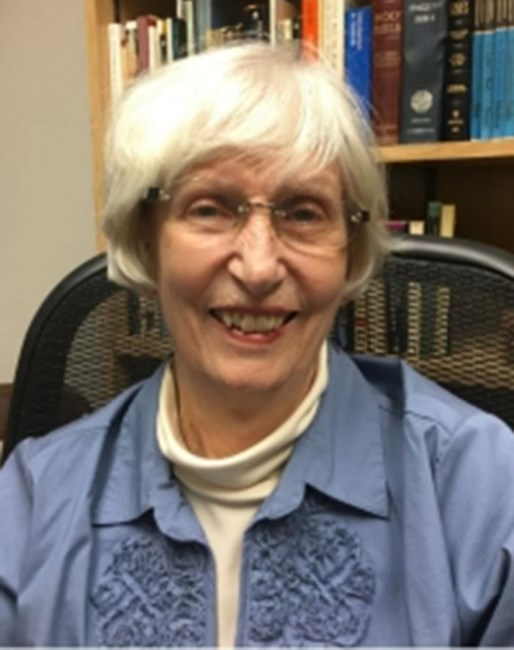
To nominate a colleague for the Barbara F. McManus Leadership Award, please use the following link for the criteria and nomination form: The Barbara F. McManus Leadership Award | CAAS-CW.  Please submit all materials to the Chair of the Awards Committee, Maria S. Marsilio, for review by members of the committee: marsilio@sju.edu.

You may find a full listing of recent honorees and an archive of past honorees here: Archive of Honorees | CAAS-CW

The firm deadline for submission of all nominations is Friday, May 1, 2026. 

Please consider nominating your colleagues who have given valuable service to CAAS.

Thank you from the Awards Committee!

Maria Marsilio, Chair

Mary Brown

James Capreedy

Lawrence Kowerski (Program Coordinator, ex officio)

Call for Proposals: 2026 CAAS Annual Meeting

Deadline for all proposals: Friday, March 27, 2026 (11:59 p.m.)

Meeting dates: October 8-10, 2026

Meeting location: The Hotel Du Pont, Wilmington, DE

Submit here: https://easychair.org/conferences/?conf=caas2026

We invite proposals for individual papers, panels, and workshops/roundtables on all aspects of the ancient world and its afterlife. Especially welcome are submissions that propose innovative approaches to established scholarly debates on classical antiquity; that integrate the interests of K-12 and college faculty; that explore new strategies and resources for improved and inclusive teaching; that share fresh ideas about communicating the importance of ancient Greece and Rome beyond our discipline and profession; that explore connections between the Greco-Roman world and other civilizations, both ancient and modern; and that reflect on the past, present, and future of Classical Studies in the CAAS region and beyond. All submissions should aim for maximum audience engagement. We will strongly encourage panels and presenters to develop their presentations into full-length manuscripts for submission to Classical World, the official publication of CAAS.

SUBMISSION DETAILS 

Eligibility to submit a proposal: All submitters must be members of CAAS when they submit their proposal. The CAAS membership year is January 1-December 31. Organizers of panels and workshops must verify participants’ membership status before submitting the proposal. Undergraduate students making an individual submission must ensure their mentors have paid the CAAS membership fee for 2026 before making a submission. Membership status can be checked by contacting the Program Coordinator (pc@caas-cw.org).

Single appearance policy: Each submitter may not submit more than one abstract (whether single- or co-authored). Authors of individual paper proposals also may not simultaneously submit a proposal as part of a panel or workshop proposal. Panel and workshop organizers should ensure that participants in their proposed sessions do not intend to appear anywhere else on the program as speakers.    

Individual Paper Proposals should be drafted for a presentation of 15 minutes in length. When the Program is finalized, additional time may be granted depending on the number of papers included in each session. Proposals of no more than 300 words should be submitted. Only Adobe Acrobat (.pdf) files are acceptable. Proposals should do the following: 

  1. Begin with a clear statement of a thesis and indicate the paper’s original contribution(s) by situating it in a larger scholarly context. The Program Committee expects to see these at the outset of the proposal.  
  2. Include a bibliography of five items, typically major and/or recent publications. These items are not included in the word count. The Program Committee expects these references to appear both in parentheses at appropriate points in the proposal to support the argument and at the end as works cited. Submitters of pedagogical abstracts may refer to innovative teaching approaches in progress.
  3. Be anonymous. The author’s name should not appear anywhere in the submission. Make references to the author’s own publications or pedagogical techniques in the third person. Proposals that include the names of authors, their institutional affiliations, or any other identifying information cannot be accepted.    

If you are an undergraduate student, please first select “Individual” under Type of Submission and then “Undergraduate Paper.”   

Panel Proposals must be drafted for a session of either 2 hours in length (3 speakers) or 2 ½ hours (4 speakers). A respondent may be included in the latter category as a fifth speaker. Especially welcome are proposals that showcase the research of (under)graduate students of a department and include at least one paper to be read by a faculty member who serves as advisor. Proposals of no more than 1000 words should be submitted by the organizer(s) as a single Adobe Acrobat (.pdf) file and include the following:   

  1. The title of the panel.
  2. The titles of each individual presentation. 
  3. An introductory paragraph that establishes the coherence of the panel as a whole and indicates its original contribution, situating the panel in a larger scholarly context. 
  4. Abstracts of the individual presentations. 
  5. Include a bibliography of five items, typically major and/or recent publications. These items are not included in the word count. The Program Committee expects these references to appear both in parentheses at appropriate points in the proposal to support of the argument and at the end as works cited. Submitters of pedagogical panels may refer to innovative teaching approaches in progress.
  6. Be anonymous. The author’s name should not appear anywhere in the submission. Make references to the author’s own publications or pedagogical techniques in the third person. Proposals that include the names of authors, their institutional affiliations, or any other identifying information cannot be accepted.    

Workshops/roundtables are typically allocated 2 hours and expected to be devoted, for their most part, to a discussion between the organizer(s)/presenter(s) and the audience. Presentations, if any, must, therefore, be shorter than those included in organized panels. All the above guidelines for panels apply to workshop/roundtable proposals except that the limit for the proposal as a whole is 700 words, excluding bibliographical references. Authors will be notified about the status of their submission by mid-May. If their submissions are accepted for presentation, all speakers and organizers must register online through Johns Hopkins University Press. 

Submission of an abstract is a commitment to present the paper in person. If a paper must be read in absentia due to extenuating circumstances, the author must inform both the presiders of the panel and the Program Coordinator as soon as they can. They must also arrange for a reader to read the paper on their behalf. Both the author and the reader must register for the Annual Meeting in the respective category (faculty or student). Mentors of undergraduate students are expected to attend in person. If this is not possible due to extenuating circumstances, they still must register in order for their name to feature in the Program.  

All submitters are advised to read the CAAS Anti-Racism Committee statement on condemning the use of the texts, ideals, and images of the Greek and Roman world to promote hateful ideology, as follows: 

“The Classical Association of the Atlantic States is committed to fighting against all forms of racism and bigotry, including anti-Blackness, anti-Semitism, sexism, anti-LGBTQ+ sentiment, ableism, and all other kinds of bias, in order to make our discipline fairer and more inclusive for all, as we strengthen the position of Classics through the development of better methods of teaching and the fostering of public support of the Classics. In addition, CAAS expects that all Annual Meeting participants treat each other with respect and afford everyone the dignity of being included in presentations and public discussions and not target, disrespect, or exclude anyone. The Program Committee therefore asks authors to be mindful of the language used in preparing abstracts and papers and to edit for biased phrasing and diction that are discriminatory or harmful to historically marginalized groups — be they racial, class, ethnic, financial, gendered, religious, or social. We call to the attention of all authors CAAS’s statement on anti-racism; the Society for Classical Studies’ statement on systemic racism, which CAAS also endorses; and the Principles of Antiracist Teaching and Reflection curated by the Multiculturalism, Race and Ethnicity in Classics Consortium (MRECC), which offers pathways for educators to advance learning and scholarship while building equity and inclusivity for historically marginalized groups in furtherance of the mission of the Classical Association of the Atlantic States. Abstracts and proposals that run counter to these values will not be accepted. Authors seeking additional information about language of equity in their submissions are invited to contact the Program Coordinator.”

Submit here: https://easychair.org/conferences/?conf=caas2026

For questions, please contact CAAS Interim Program Coordinator Lawrence Kowerski (pc@caas-cw.org). Please contact the CAAS Webmaster (webmaster@caas-cw.org) with technical questions regarding submission through EasyChair.  

CAAS Conference Travel Subsidies: CAAS offers need-based travel subsidies (up to $600) to speakers and members planning to attend the Annual Meeting. The call for applications will be announced by the Chair of the Program Committee Travel Subsidies Subcommittee in late Spring 2026, after the circulation of the first draft of the Program by the Program Coordinator.   

CAAS Presentation Awards: CAAS recognizes the excellence of papers delivered in person at the annual meeting by means of monetary awards in four categories: Post-Ph.D.; Graduate Student; Undergraduate Student; and K-12 Educator. Presiders who will receive advance copies of papers to be read in their sessions are asked to nominate outstanding individual presentations after the annual meeting, submitting detailed commentary on the content, argument, and delivery of the paper. The Chair of the Program Committee Awards Subcommittee will announce recipients of awards before December 31. 

Announcing New CAAS Leadership Appointments

The CAAS Executive Committee is delighted to announce the appointment of Denise Flood-Doyle as Executive Director from 2026–2028. Denise has held a wide range of leadership roles in CAAS since 2013. She was New York Eastern Regional Director from 2013–2019 before embarking on the cursus, serving as Second VP (2019), First VP (2020), President (2021), and Officer-at-Large (2022), a role she reprised in 2025 after the incumbent resigned. She was also the ACTFL Delegate from 2019–2022. Please join the Executive Committee in welcoming Denise in her new role as CAAS Executive Director. We would also like to thank the outgoing Executive Director, Mary Brown, for her years of tireless service and dedication to CAAS.

The CAAS Executive Committee is pleased to announce the appointment of Lawrence Kowerski—CAAS Archivist and Reviews Editor of Classical World—to the position of Interim Program Coordinator for 2026. We would also like to thank Konstantinos Nikoloutsos, the outgoing Program Coordinator, for his years of service to CAAS.

The Board will appoint a Program Coordinator to a three-year term this year. If you are interested in this position, please contact the Chair of the Nominations Committee, Karen Klaiber Hersch (karen.klaiber@temple.edu).

Antiquity in Media Studies (AIMS): Call for Papers for 2026 Spring Conference Series

Antiquity in Media Studies (AIMS) seeks proposals for a new monthly conference series, running on the last weekend of every month from February through April 2026: February 28-March 1, March 28-29, and April 25-26. The AIMS virtual conference series remains free and open to all, and welcomes proposals on any topic related to the reception of the ancient Mediterranean world in modern media.

For the AIMS 2026 monthly conference series, we invite various formats for the presentation of research, pedagogy, and creative responses to the reception of Mediterranean antiquity, including but not limited to: individual 20-minute papers, three-paper panels, roundtables, workshops, poster sessions, lightning sessions, play-throughs, live multiplayer games, technical demonstrations, creative showcases, creator interviews, and other activities that can fit within a 60-90-minute time slot and be delivered remotely at this online conference series. With conference events spread across three months, presenters will choose their preferred presentation day.  

The AIMS conference series is held online using a mixture of live and pre-recorded elements. Note: 20-minute paper presentations are pre-recorded and circulated prior to the live presentation day. This hybrid format accommodates as many participants as possible, regardless of geographic location/time zone, professional rank, access to travel funds, mobility impairment, and other factors implicated in the traditional conference format. We welcome proposals from all scholarly ranks, including early-career scholars, independent scholars, as well as working professional craftspeople/artists. We invite scholars from marginalized groups, along with people who traditionally have been able to participate in academic activities with relative ease. Our conference committee remains our Board of Directors and all members of the DEI committee. This group reviews proposals and assists with scheduling conference events.

There will be two deadlines for proposals: priority and regular. The priority deadline will be January 9, 2026; presenters can expect to be notified by January 23, 2026. For any remaining slots, the regular deadline will be January 30, 2026; presenters can expect to be notified by February 9, 2026. In keeping with AIMS’ ethos of promoting accessibility, it is our regular practice to allow the chance for presenters to revise and resubmit their conference proposal before a final decision is made.

For the full CfP, see the AIMS website: https://antiquityinmediastudies.wordpress.com/2024-conference-cfp/ 

Please upload your conference proposal at the following link: https://forms.gle/GXGVSuS9CnVL5bct7.

Questions about AIMS or the 2026 Conference Series? Please contacts the AIMS President at president-aims@proton.me

2025 CAAS Best Paper Awards

Featured

The CAAS Program Committee Awards Subcommittee is pleased to announce the recipients of the Best Paper Awards presented at the 2025 Annual Meeting. The awards recognize excellence in the following categories:

Post-Ph.D.

  • Molly Jones-Lewis (University of Maryland, Baltimore County)
    “How to Spin a Thread: Experimental Research in Greek and Roman Wool Processing”
  • Pamela Zinn (Texas Tech University)
    “Platonic Love and Lucretius”

Graduate Student

  • Kathryn Stutz (Johns Hopkins University)
    “Nobler Than Thetis’s Son? Classicizing Monuments in Nineteenth-Century Baltimore”

K–12 Educator

  • Nathan Moore (Calvary Day School)
    “Constantius II and King Ahab in the Writings of Lucifer of Cagliari”

The Subcommittee congratulates all award recipients for their exceptional contributions to the field. 

Chair: Andrea Kouklanakis; members: Sarah B. Ferrario, Tyson Sukava, and Konstantinos P. Nikoloutsos (ex officio).

Tribute in Memory of Professor Timothy Renner, Past CAAS President

Below is a statement from Professor Victoria Larson at Montclair State University on the recent passing of our beloved colleague, Professor Timothy Renner:

“It is with heavy hearts that we announce the death of Professor Timothy Renner, long-time member and Chair for twenty-seven years (1980-2007) of the Department of Classics and General Humanities.

“Graduating magna cum laude in Latin/Classics with a concentration in archaeology from Yale University in 1968, and armed with a doctoral dissertation from the University of Michigan on Greek papyri, Tim’s first job was a one-year instructorship (1972-73) at Lawrence University, Appleton, Wisconsin, followed by another one-year instructorship (1973-74) at Rockford College (now University), at Rockford, Illinois. It was at that point, in September, 1974, that Tim took up what would turn out to be a fifty-one year career at Montclair State College (as it was then), joining a department of one—David Kelly—its two senior faculty members (Doris Kibbe, Carolyn Boch) having just retired.

“From 1974 on, Tim would invest all his dogged and indefatigable energies into expanding the department and growing its potential, building it up eventually to twelve tenured faculty. Teaching ancient history and civilization courses was just the beginning of what he did for the Department and University, his contributions to “service” on campus, as well as to his field more generally, being impressively many and varied. At Montclair, he was a member of numerous Department and University committees, the founding force behind the Center for Heritage and Archaeological Studies, enthusiastic promoter of its interdepartmental Archaeology minor, and founder of the local society of the Archaeological Institute of America (AIA) and its lecture series at Montclair. He was the Director of the Institute for the Humanities from 1984 to 2008, and Co-Director from 2008-2010. From the late 1980’s onwards, he regularly spent his entire summer “break” digging at the New Jersey Archaeological Consortium excavation at Tel Hadar in Israel, and in more recent years participated with his colleague Professor Deborah Chatr Aryamontri in many seasons at the University’s excavation at the Villa of the Antonines site outside Rome. He was President of the Classical Association of the Atlantic States (CAAS) from 1989 to 1990 and Chair of the Cultural Diversity Subcommittee of the American Classical League from 2005 to 2010. He was President of the American Society of Papyrologists from 1998 to 2002, and for many years a co-editor of this society’s scholarly journal, the Bulletin of the American Society of Papyrologists (BASP).

“Many by-now-well-established scholars are grateful to Tim for his friendly mentorship as they were beginning their careers. And all of us will miss his inspiring drive to keep on doing what needs to be done—and more—always with implacable and wry good humor.

“The department is planning a celebration of Professor Timothy Renner to be held on campus early in the Spring semester.”

CAAS Nominations Committee 2025 BALLOT

An important announcement from CAAS Executive Director Mary Brown:

“Dear current Members who work/reside in the CAAS Region, for your review is the proposed ballot recently approved by the Executive Committee. Keep in mind that eligible Members with the affirmation of 15 total eligible Members may nominate candidates. If you want to do so, contact Executive Director Mary Brown with your nominee/s by December 10, mbrown@sju.edu.”

https://docs.google.com/document/d/1atw1uQ9c4h4p93BLtuL-JCqPWVfJXyhvcIdacBYchFM/mobilebasic

December 12 Deadline for AAR’s 2026 Classical Summer School

The deadline to apply for the American Academy in Rome‘s 2026 Classical Summer School is Friday, December 12, at 11:59 pm EST. Both the AAR and CAAS offer partial and full scholarships for the AAR’s summer session. To learn more about the Classical Summer School, visit https://www.aarome.org/apply/2026-classical-summer-school. To learn more about CAAS’s Hahn Scholarship, visit https://caas-cw.org/caas/scholarship/.

CUNY’s Graduate Student Conference: Call for Papers

Thalassocracy and the Power of the Sea
CUNY Graduate Center
Date: April 24, 2026
Keynote Speaker: Elizabeth Irwin, Columbia University

The Oxford English Dictionary defines thalassocracy as “Mastery at sea; the sovereignty of the sea.” But the power of the sea entails more than just political and naval supremacy. The sea means different things to the inhabitants of the ancient world: it begins as a barrier, serves as a food source, and becomes a superhighway. Through it all, poets imagine the sea as an alien world, the home of monstrous creatures, divine beings, and the spirits of the dead.

This year, the Classics Department at the CUNY Graduate Center invites papers that explore the nature of thalassocracy and the power of the sea in the history, rhetoric, poetry, and mythology of the Greek and Roman world. We welcome submissions that address, but are not limited to, the following themes:

● Gods and goddesses of the sea
● Maritime monsters
● Oceanus as world’s end
● Insularity both as an expression of connectivity and as an indicator of isolation
● Trade, migration, and warfare
● Material culture of the Mediterranean basin
● Ships and the art of ship building

We welcome submissions from graduate students and advanced undergraduates specializing in the ancient world (Classical and Near Eastern Studies, history, archaeology, anthropology, religious studies, philosophy, comparative literature, etc.). We are especially interested in scholarship that employs interdisciplinary approaches to the ancient world.

Submission Guidelines:

Presentations will be 15 minutes in length, followed by 5 minutes for questions.

Please submit abstracts of no more than 300 words (plus a select bibliography) in PDF format to cunyclassicsconference@gmail.com no later than Monday, December 8th. Decisions will be made anonymously. Kindly include your full name and affiliation in the body of your email.

For questions, please contact the co-organizers: Andrew Hagerty (ghagerty@gradcenter.cuny.edu) and John Griffin (jgriffin1@gradcenter.cuny.edu).